-
18
Mar 2026
Semana Santa in Andalusia
A week of traditions, music and impressive processions
During Holy Week, towns and cities in southern Spain become the setting for centuries-old processions, music and deep devotion.
The meaning of Holy Week
Holy Week – known in Spain as Semana Santa – is one of the most important religious periods in the Christian calendar. During this week, people reflect on the suffering, death and resurrection of Jesus. Semana Santa marks the end of Lent and includes important days such as Maundy Thursday and Good Friday. This year, Semana Santa takes place from Sunday 29 March to 5 April.
Although Christmas is often celebrated more exuberantly in many Western countries, Holy Week holds an even deeper meaning within the Christian tradition. The highlight of this period is the Triduum Sacrum, essentially the heart of Holy Week.
This period begins on Maundy Thursday, continues with Good Friday and Holy Saturday, and concludes during the night with the Easter Vigil. During these special days, the story of the suffering, death and ultimately the resurrection of Jesus Christ is commemorated step by step.
The Easter Vigil ushers in the joy of Easter Sunday, the day on which Christians celebrate that Jesus rose from the dead. At the same time, Easter coincides with the beginning of spring and also symbolizes new life.
Processions, music and centuries-old traditions
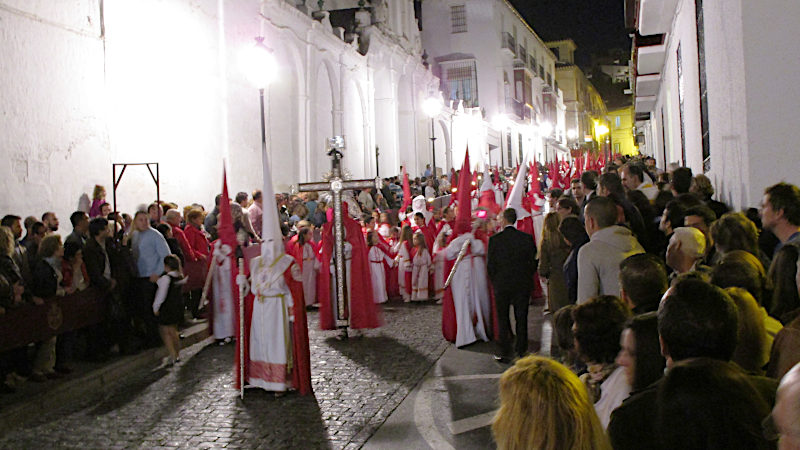
As Semana Santa begins, the atmosphere in towns and cities changes completely. The streets fill with impressive processions shaped by centuries-old traditions, music and deep devotion. What may be difficult for outsiders to fully grasp often represents the emotional high point of the year for many Andalusians.
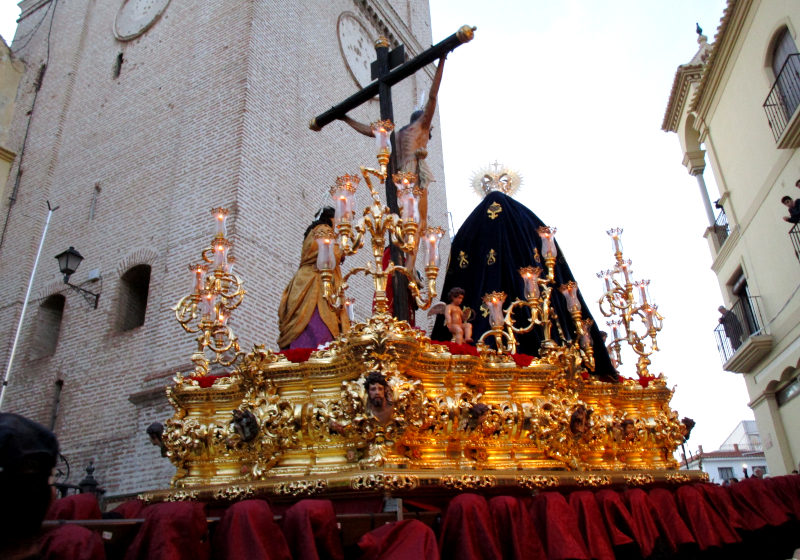
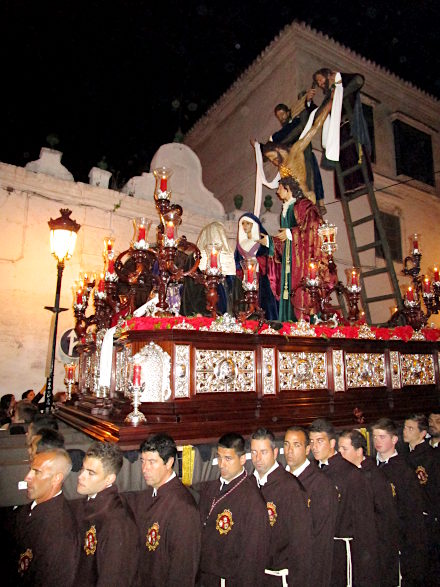
Every day, religious brotherhoods (cofradías) leave their churches and make their way through the streets. During these processions, large religious images are carried through the city on richly decorated platforms, known as tronos or pasos. These striking structures, often adorned with flowers, silverwork and hundreds of candles, depict scenes from the Passion of Christ or present an image of the Virgin Mary.
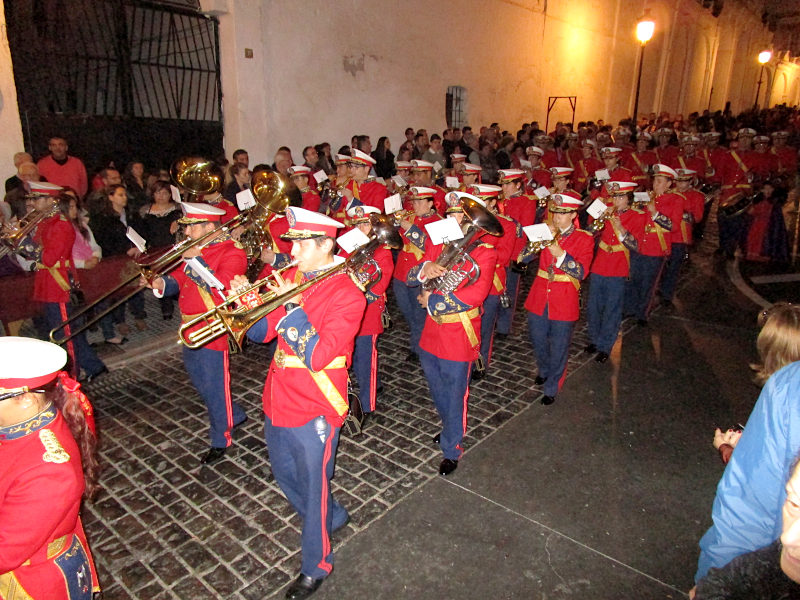
These tronos are carried by dozens, and sometimes even hundreds, of costaleros – bearers who walk beneath the structure and carry its weight on their shoulders. The pace is directed by a leader, while brass bands and drums accompany the procession. At times a solemn march is played; at other moments the silence is emphasised and all you hear is the soft shuffling of feet and the tapping of staffs on the cobblestones.
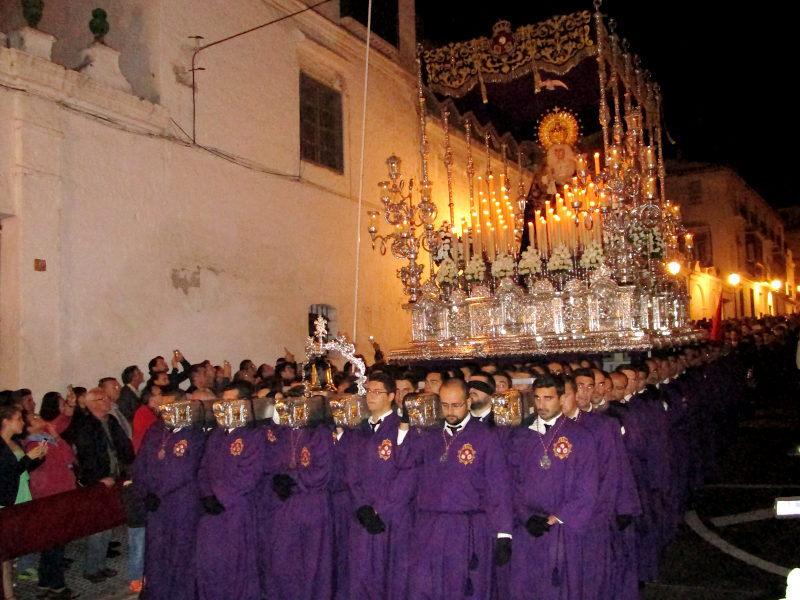
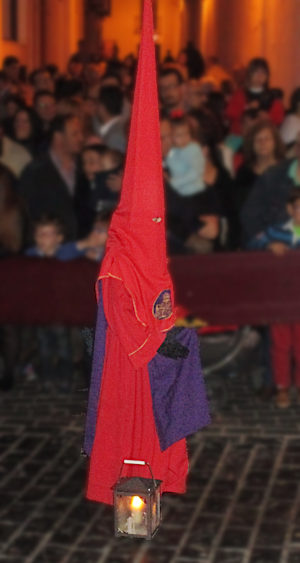
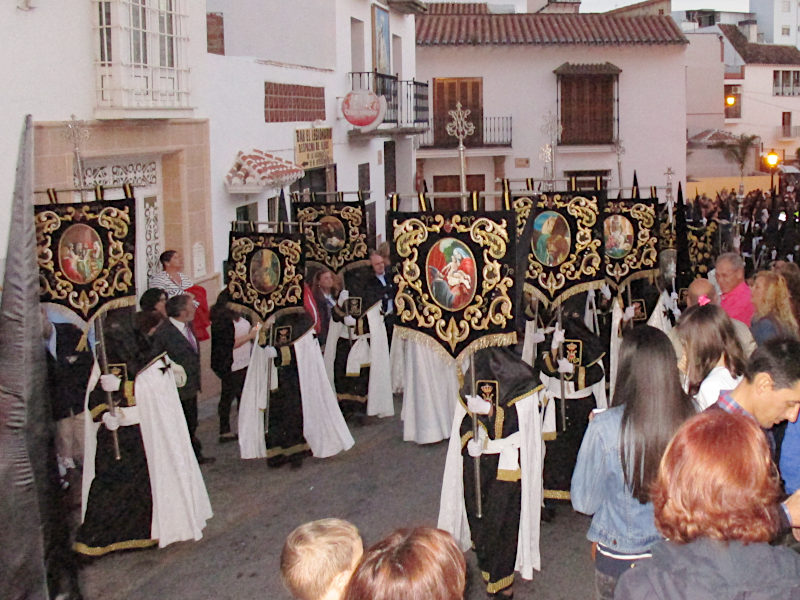
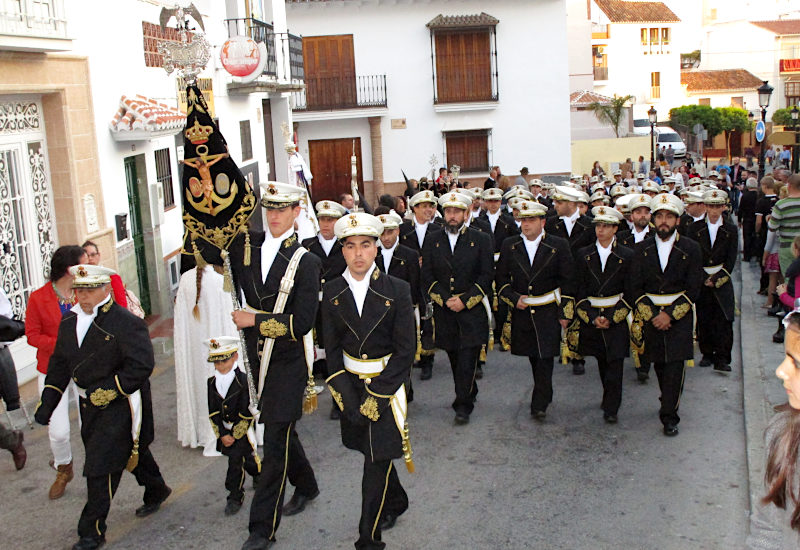
What stands out during the processions, alongside all those magnificent thrones, statues and decorations, are the people taking part; dressed in pointed hoods, women in black and a mantilla (a high black veil), sometimes carrying candles and crosses or even walking barefoot. They are called the penitents (penitentes), some wearing a conical hat (el capirote or el cucurucho), and the Nazarenes (nazarenos), who parade behind the throne but do not wear this pointed hat. Incidentally, the tall pointed hoods date back to the time of the Spanish Inquisition, when the condemned were obliged, as a form of penance, to wear a pointed hood that covered their face, back and chest. They believed at the time that by wearing this hood, they were closer to heaven. Some brotherhoods also have young members, who usually walk as far as they can early in the evening.
Sometimes the silence is suddenly broken by a saeta: an emotional, often spontaneous song sung from a balcony or from the crowd. With clear influences from flamenco, this deeply moving song is addressed directly to the religious image passing below and often creates one of the most memorable moments of the procession.
From large cities to small villages
The way Semana Santa is experienced also varies from place to place. In large cities such as Seville or Málaga, the processions attract thousands of visitors and are organised on a grand and impressive scale. In smaller Andalusian villages, the atmosphere is often more intimate and personal. People know one another, families take part together in the processions, and residents watch from their own street or from their balconies. It is precisely this combination of great tradition and local involvement that makes Semana Santa so special throughout southern Andalusia.
What do these words mean during Semana Santa?
In the stories about the Semana Santa, you will come across a number of typical Spanish terms directly related to the processions. These are some of the most important ones:
Cofradía
A religious brotherhood responsible for organising the processions during Semana Santa. Many of these brotherhoods are centuries old and have their own church, traditions and attire.
Trono (or paso)
The large platform on which the religious images are placed. These impressive structures are often richly decorated with flowers, silverwork, candles and embroidery. Some tronos can weigh several tons.
Nazareno
A member of a brotherhood who walks in the procession wearing a long robe and a pointed hood (capirote). They often carry candles, crosses or other symbols and take part as a sign of penitence and devotion.
Costalero
The bearers who walk beneath the trono and carry the heavy platform on their shoulders. They move through the streets in a fixed rhythm and are directed by a leader who sets the pace.
Saeta
An emotional and often spontaneous song sung during a procession from a balcony or from the street. The singing is deeply religious and strongly influenced by flamenco.
Whether you come specifically to witness it or simply find yourself in the middle of it during a visit to Andalusia, Semana Santa is an experience you are unlikely to forget. The processions, music and impressive imagery offer a unique glimpse into the culture and traditions of southern Spain – a week in which history, faith and community come together in the streets of towns and cities.
https://www.visitanddo.com/en/malaga-holy-week/
Buy your dream house without worries

We have no shop window or many properties for sale on this website because we believe in personal attention & tailor-made offers; therefore we always work on a specific request basis. From experience we know that buying a home in Spain is different than in your own country, therefore we make every effort to make it run as smoothly as possible.